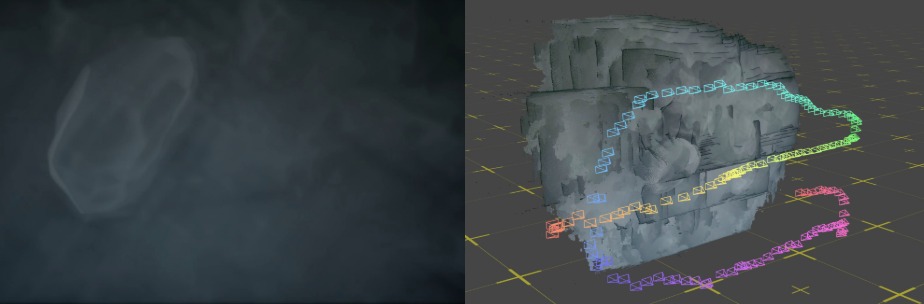
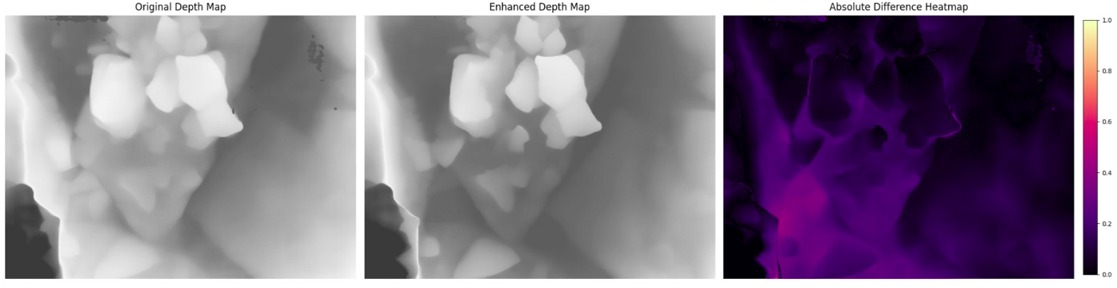
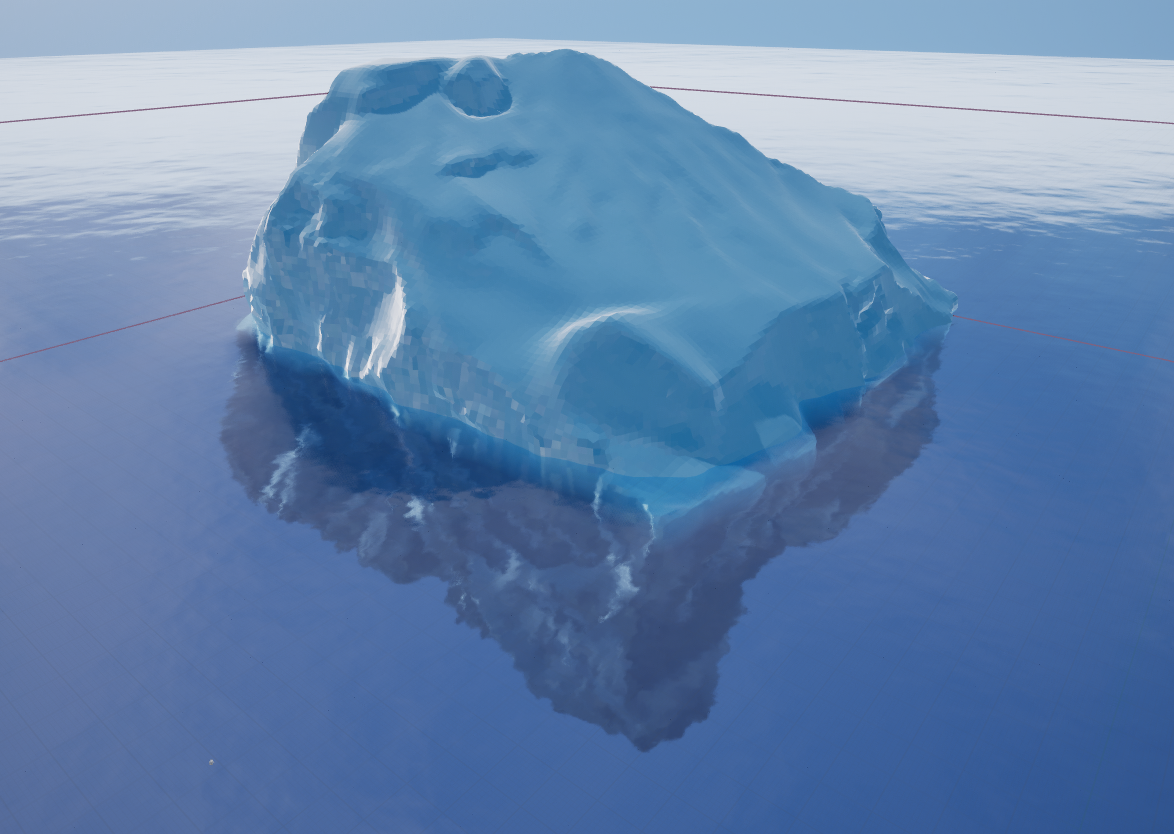
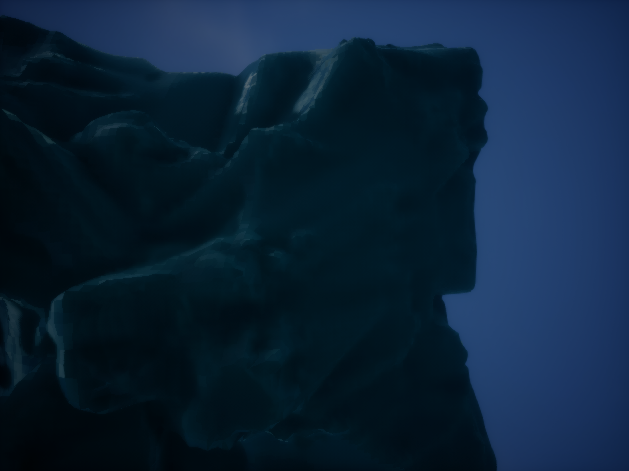
Our results highlight two complementary directions for future research: expanding the diversity of synthetic training environments, and closing the gap between offline benchmarking and real-time autonomous operation.
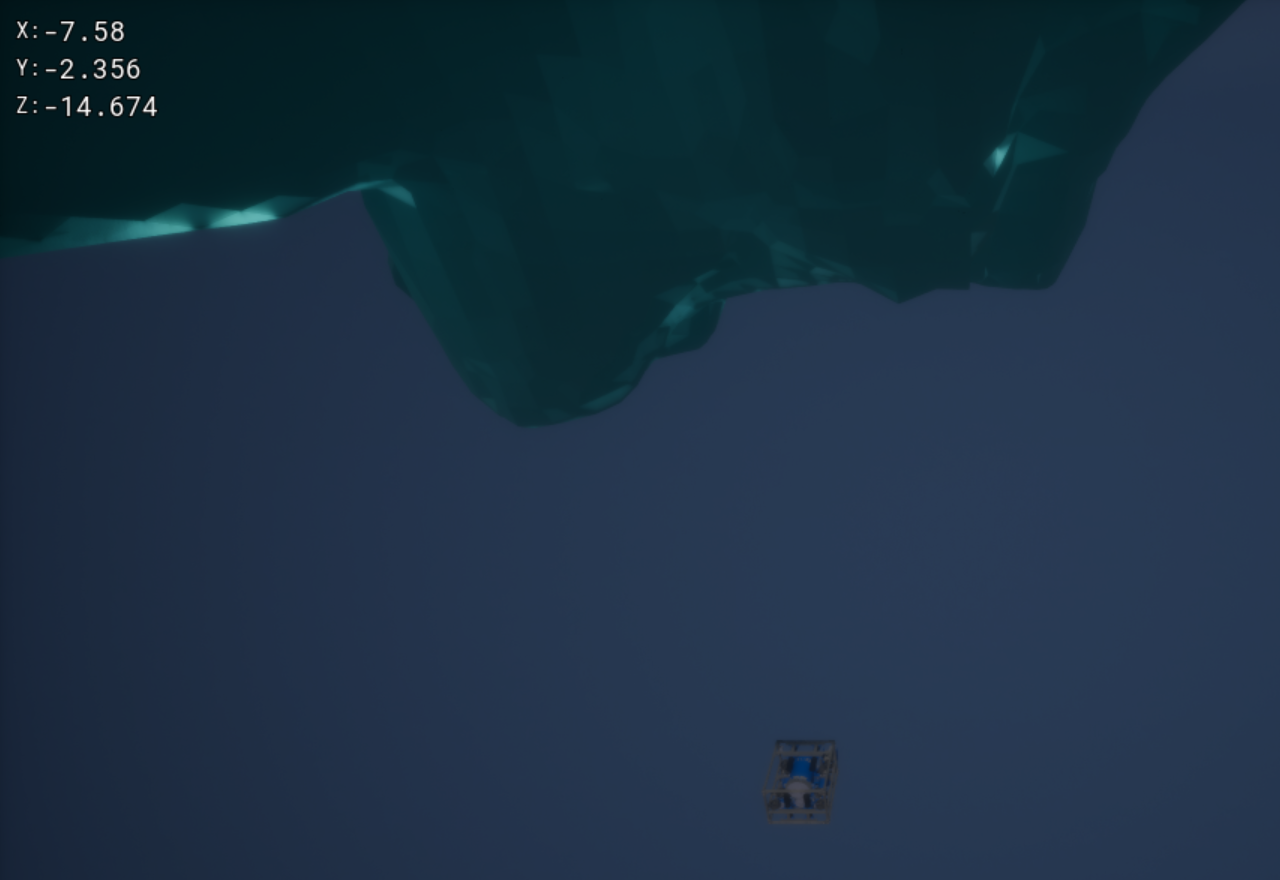
We are actively developing an extended synthetic pipeline in HoloOcean and plan to release a new open dataset later this year. This involves generative mesh pipelines (Meshy, Pixal3D) to produce diverse ice morphologies on demand — from smooth congelation ice to heavily fractured pressure ridges — broadening training scenarios without requiring additional field expeditions.
Drone-based RGB and LiDAR surveys of the ice surface will be co-registered with underwater sonar to build cohesive full-thickness ice models, simultaneously capturing freeboard and draft for volume estimation and radiative transfer modelling. From a geometric perspective, the above-water surface can act as a guiding prior for camera pose estimation in regions where optical methods beneath the ice fail due to turbidity or featureless surfaces.
Synthetic multimodal data will be used to fine-tune vision foundation models such as DA3 against the photometric scattering and texture-sparse conditions inherent to under-ice environments, directly addressing the sim-to-real gap observed in this benchmark. Ultimately, we aim to translate this into a hybrid acoustic-visual SLAM pipeline, wherein sonar constrains global drift and optical flow refines local trajectory estimates, targeting computationally efficient deployment on embedded ROV hardware at survey framerates.